

John Wannamaker is famous for saying, “Half the money I spend on advertising is wasted; the trouble is I don’t know which half.”. When I was Chief Research Officer at the ARF, I would often hear people say, “If only we could eliminate waste in advertising.”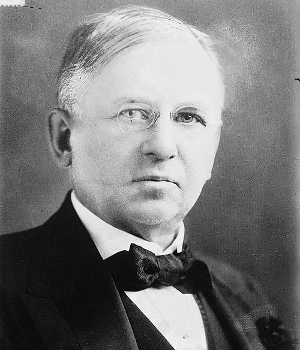
Being a curious soul, I decided to calculate how much wasted advertising a marketer can afford and still have a successful campaign. The advertising arithmetic will surprise you as it did me.
It turns out that, for a campaign to pay out, less than 1% of impressions need to be “impact impressions”, that is, directly lead to a purchase. So stop bemoaning waste; accept it as part of an advertising calculus that leads to profitable brand building.
While this result is counter-intuitive (that’s what makes it so interesting), the math is undeniable.
First, at a high level, consider the fact that a brand with even a modest ad budget is probably buying BILLIONS of ad impressions in the hopes of generating MILLIONS of unit sales. That already tells you that impact impressions can be a faction of one percent for the successful campaign.
Let’s work through the numbers with a prototypical brand.
- The brand. 10% of US households buy it in a year and based on its price, repeat rate, purchase cycle and buying rate it annually generates 44MM unit sales and $110MM in dollar sales at retail.
- The action. It doubles its annual ad spend from $10MM to $20MM. At an average $5 CPM, this means they are buying an extra 2 BILLION impressions across various media.
- The expectation: Generate a 20% increase in sales which translates into about 2MM more households buying the brand and generating 8.8 MM in incremental unit sales.
- Impact impressions rate: Is a little less than one half of one percent which can be calculated as 8.8 million incremental units/2 billion impressions. Alternatively, we can think of the incremental advertising as generating about 2MM more buyers (who then make a stream of purchases) which makes the impact rate even smaller. As a logic check, we can also think of this as a 20% increase in sales for a doubling of ad spend, which is an ad elasticity of 0.20…on the high side but still within a mid-range of experience for existing brands.
Are the other 99% of impressions wasted? Not all are…they create consideration and familiarity from which a percent become new buyers, they reinforce beliefs and remind people of your brand as they are about to shop while competitors are still in consideration. But beyond that, I would advise against marketers thinking they can create such a rifle shot approach that we will ever be able to target the few percent of impressions that had an impact and save our money by not buying the “wasted impressions”. I think that there is a huge amount of randomness in consumer and shopper brains so the great majority of those billions of impressions is needed to allow a small percent of new buyers scattered about (in targeting and brand perception spaces) to accidentally find the brand and begin buying it.
I do think that targeting will improve results but can never eliminate what people wrongly call waste. Even digital, where we can use the most sophisticated targeting analytics such as retargeting and lookalike modeling of conversions, achieves lifts in response that might be multiples of what we would get otherwise, but are still in the single digits. This means target but don’t over target, or as Jack Wakshlag, Chief Research Officer at Turner says, “Segmentation is like salt. A little bit is good, a lot can kill ya.”
Hopefully, working through the math has stimulated your thinking and reduced your anxiety about advertising waste, as it did mine. It will help you to reconcile the troubling industry narrative some put forth of how no one wants to watch ads on TV or click on them on their computer so marketers need an alternative to paid advertising. We now see how wrong that storyline is and the importance of focusing on sales impact to judge marketing effectiveness. Social and owned media are certainly part of a synergy but they amplify rather than replace the scale, power, and incredible affordability of using paid advertising channels.
Contribute to Discussion »